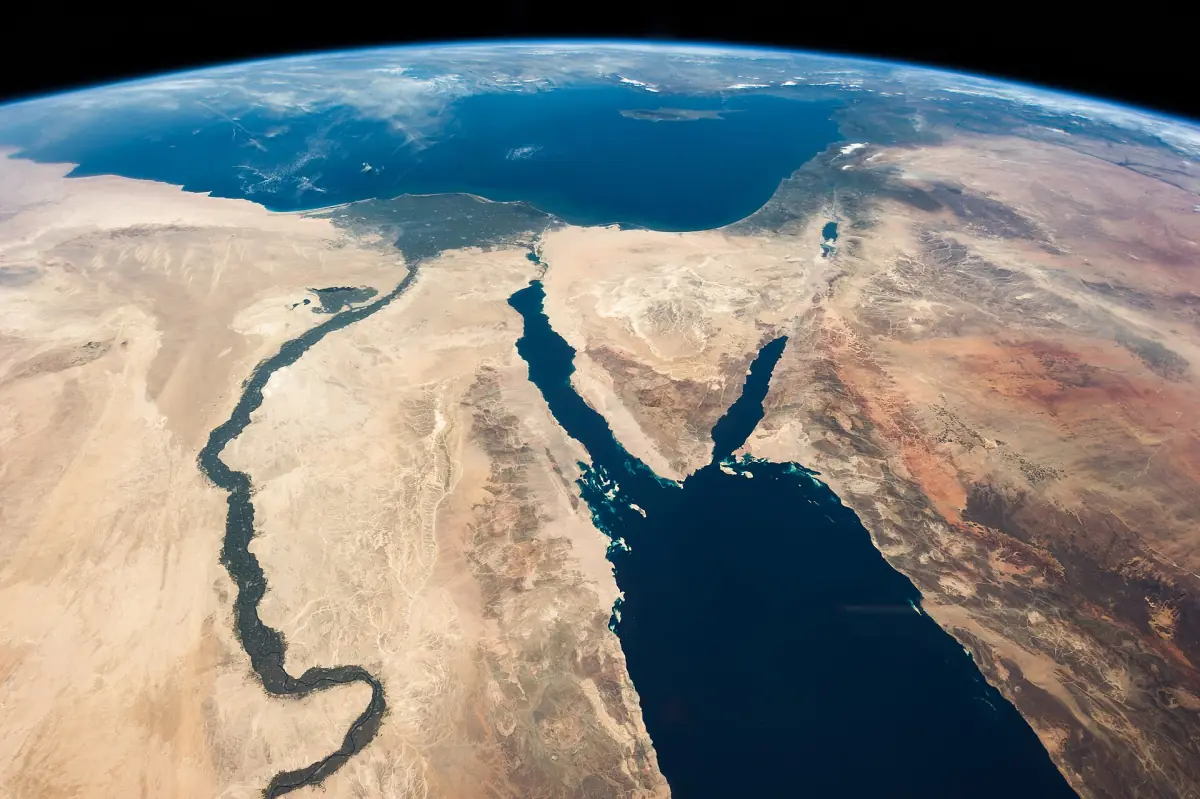
Nile River facts at a glance
The Nile is a river system rather than a single stream. Two main arms, the White Nile and the Blue Nile, meet at Khartoum in Sudan. From there the river flows north through Sudan and Egypt to the Mediterranean. In Egypt it is the river you travel on: a Nile cruise from Luxor to Aswan follows one of its best-known stretches.
The numbers below are approximate. Length depends on where you place the source and how you measure the bends, so treat every figure as a range, not a record.
Nile River facts: length, sources, dams and countries
The main numbers in one table.
| Topic | Fact |
|---|---|
| Length | About 6,650 to 6,670 km, depending on how it is measured |
| White Nile | Comes from the East African lakes region |
| Blue Nile | Flows out of Lake Tana in Ethiopia |
| Meeting point | Khartoum, Sudan |
| Source at Jinja | The Nile leaves Lake Victoria at Jinja, Uganda |
| Basin countries | 11, including Egypt |
| High Dam | Finished July 1970, inaugurated 15 January 1971 |
| GERD | Blue Nile, Ethiopia, inaugurated 9 September 2025 |
For most readers planning a trip, the part that matters is the Egyptian stretch between Luxor and Aswan, and the High Dam is the fact that changed it most.
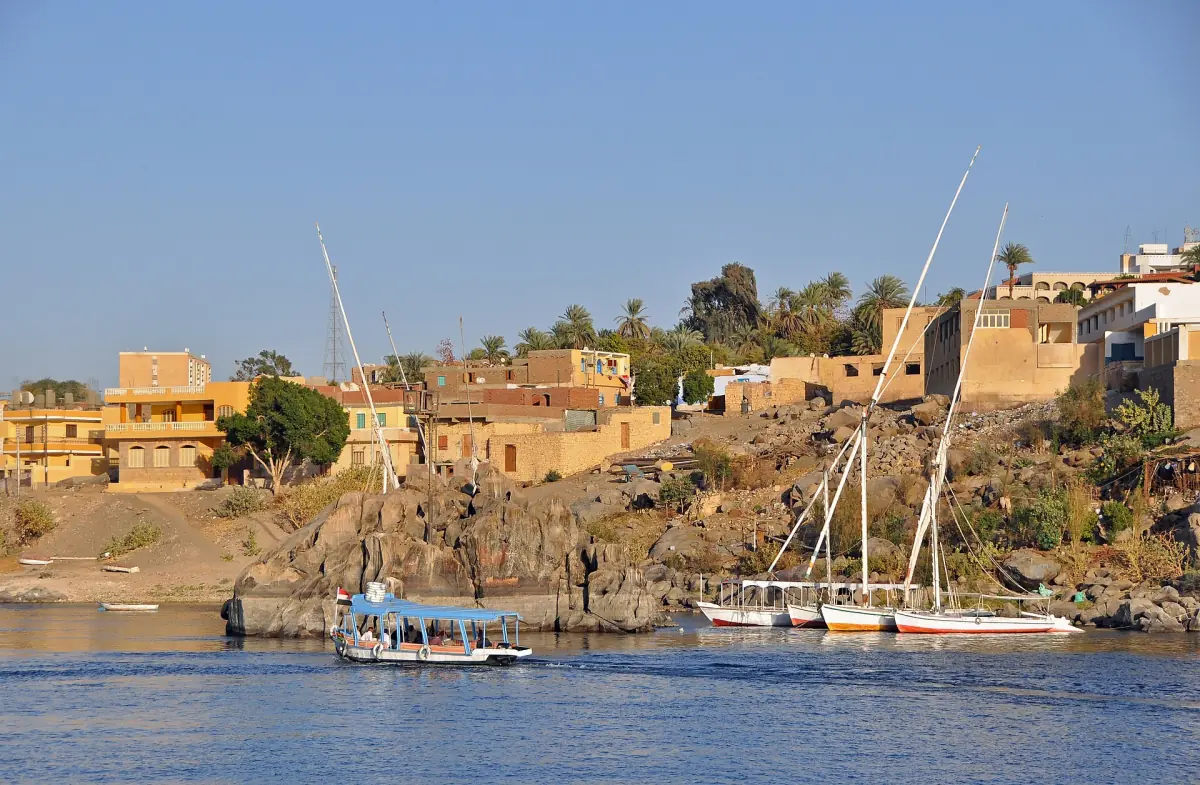
Our pick: the Nubian Nile
Our take: a short motorboat trip to the Nubian village near Aswan.
Hand-picked tours, booked through GetYourGuide. Prices are indicative starting prices in US dollars (as of October 2026). Tap a tour for live availability and the current price in your currency.
Nile cruises and experiences in Egypt
Nile cruises, felucca rides and temple excursions on the Egyptian Nile, with live prices and availability.
How long is the Nile?
The Nile is usually given as about 6,650 to 6,670 km. The range comes from different ways of measuring the river, and no figure is exact to the metre.
The Nile generally counts as the longest river on Earth, although the Amazon is sometimes placed first, depending on where the source is set and how the river is measured. By most measures, the Nile comes first.
Sources: White Nile, Blue Nile and Jinja
The White Nile comes from the East African lakes region. The Blue Nile comes from Ethiopia and flows out of Lake Tana. The two meet at Khartoum, and the combined river runs north.
At Jinja in Uganda the Nile leaves Lake Victoria, and the tourist site there is called the Source of the Nile. It is the source you can visit, a place where you can stand. The most distant headwater of the whole river system may lie further upstream.
The summer rains in the Ethiopian highlands used to make the Blue Nile swell, and the flood that followed carried mud onto Egyptian fields. The history of the Nile explains how that rhythm shaped the calendar and farming.
Nile countries: the basin versus the river
Eleven countries share the Nile Basin. The river itself does not flow through all of them.
| Country | Role |
|---|---|
| Burundi | Basin country and member of the Nile Basin Initiative |
| DR Congo | Basin country and member |
| Egypt | Basin country and member, the final stretch to the sea |
| Ethiopia | Basin country and member, home of the Blue Nile |
| Kenya | Basin country and member |
| Rwanda | Basin country and member |
| South Sudan | Basin country and member |
| Sudan | Basin country and member, where the two arms meet |
| Tanzania | Basin country and member |
| Uganda | Basin country and member, with Jinja on Lake Victoria |
| Eritrea | In the basin, not one of the 10 members |
The main channel from Khartoum to the sea runs through Sudan and Egypt. The other countries are in the basin because tributaries, lakes or rainfall feed the system. For a trip in Egypt, none of this changes the route.
The Aswan High Dam
The High Dam stores water for flow regulation, supply and power. The main body was finished in July 1970 and the dam was inaugurated on 15 January 1971, so the two dates are not interchangeable. Its reservoir, Lake Nasser, reaches into Sudan.
The dam replaced the old natural rhythm of the yearly flood with managed irrigation. To see it, read our Aswan guide, or learn about the lake in the Lake Nasser cruise guide. The rescue of Philae, moved to Agilkia to save it from flooding, belongs to the same story.
The Grand Ethiopian Renaissance Dam
The Grand Ethiopian Renaissance Dam, known as GERD, stands on the Blue Nile in Ethiopia, near the border with Sudan. It was inaugurated on 9 September 2025. Ethiopia stresses power generation and the regulation of the river. Egypt objects to a dam built and operated without agreement and asks for protection of the countries downstream.
Sudan saw floods in 2025. For current conditions on your route, ask your operator before you go.
The Nile in Egypt
What the river means for a visit.
The cruise stretch
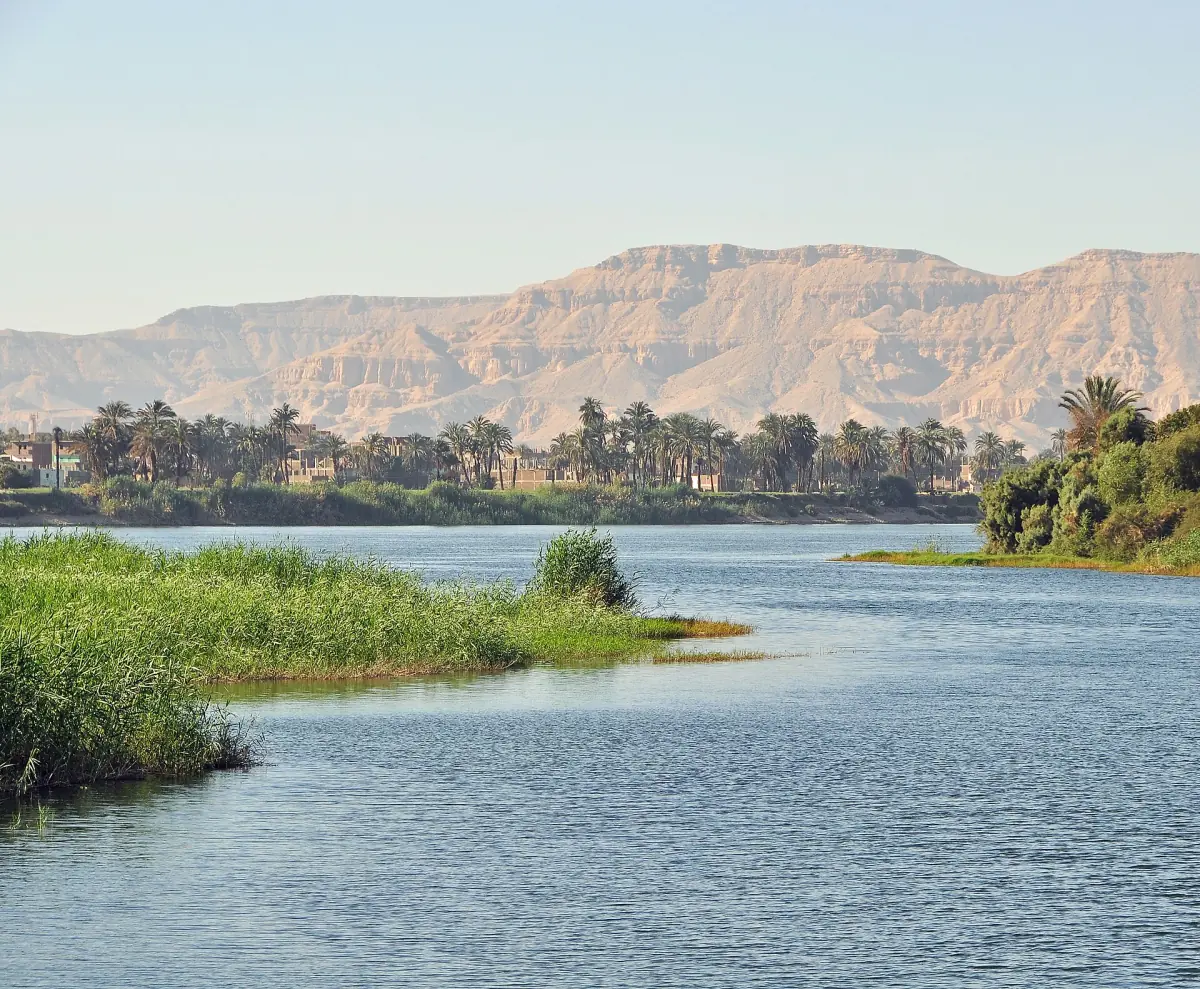
Cruises between Luxor and Aswan pass the Esna lock and stop at temples such as Edfu and Kom Ombo. See the Luxor to Aswan guide for routes and nights.
The delta
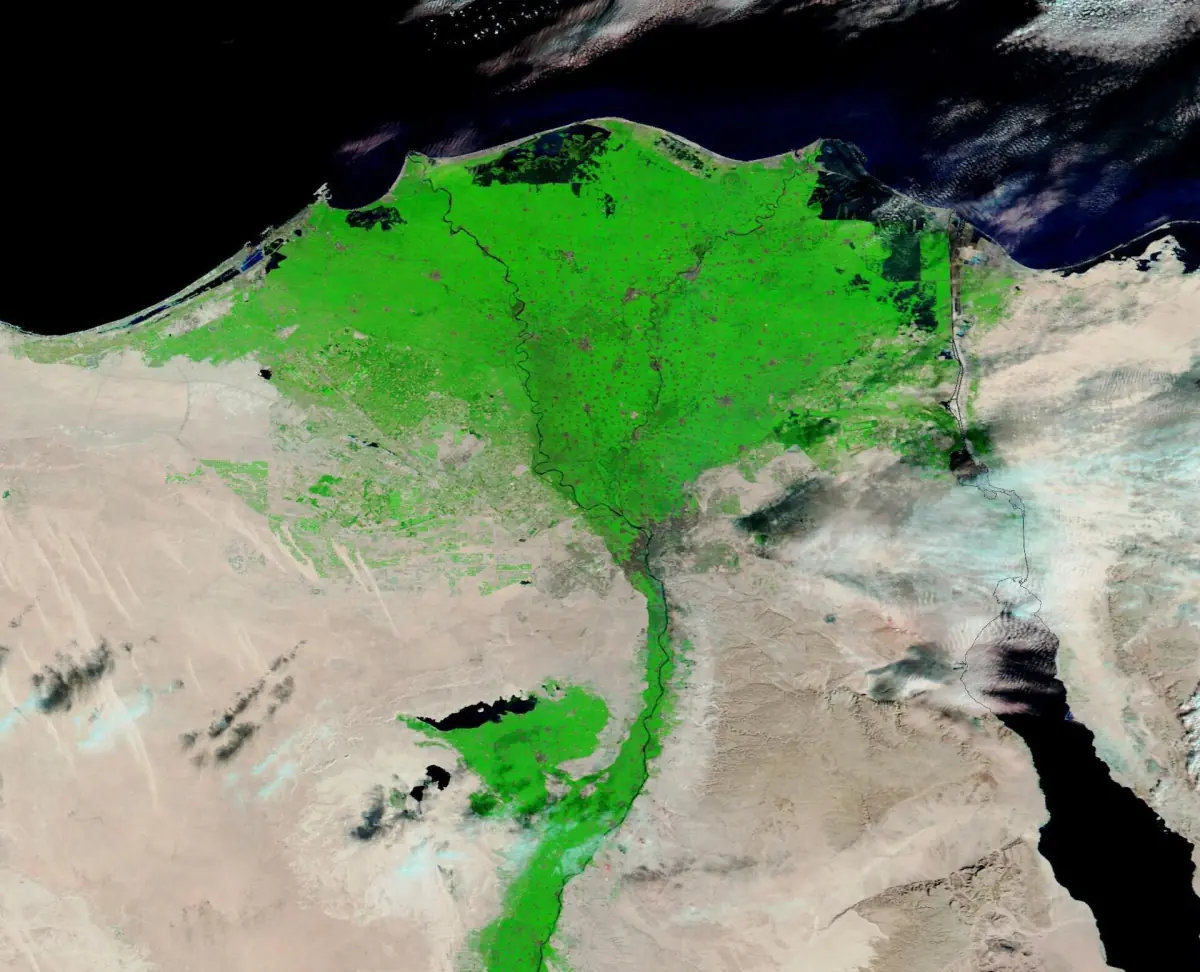
North of Cairo the river fans out into the green Nile Delta, visible from space. Cairo is the setting for the evening dinner cruises.
A health note
The German Foreign Office advises against bathing in fresh water in Egypt because of schistosomiasis.
Nile River facts: frequently asked questions
How long is the Nile?
About 6,650 to 6,670 km. The figure is approximate and depends on how the source and the bends are measured.
Is the Nile the longest river in the world?
It generally counts as the longest, but the Amazon is sometimes placed first, depending on the source and the measurement. By most measures the Nile comes first.
Which countries does the Nile flow through?
The main channel from Khartoum runs through Sudan and Egypt. Eleven countries share the Nile Basin, but the river does not flow through all of them.
Where does the Nile begin?
The White Nile comes from the East African lakes region and the Blue Nile from Lake Tana in Ethiopia. The tourist Source of the Nile is at Jinja in Uganda, where the river leaves Lake Victoria.
When was the Aswan High Dam built?
The main body was finished in July 1970 and the inauguration was on 15 January 1971.
Is this the official Nile website?
No. This is an independent travel guide, not connected to any ministry, museum, cruise line or tour operator.